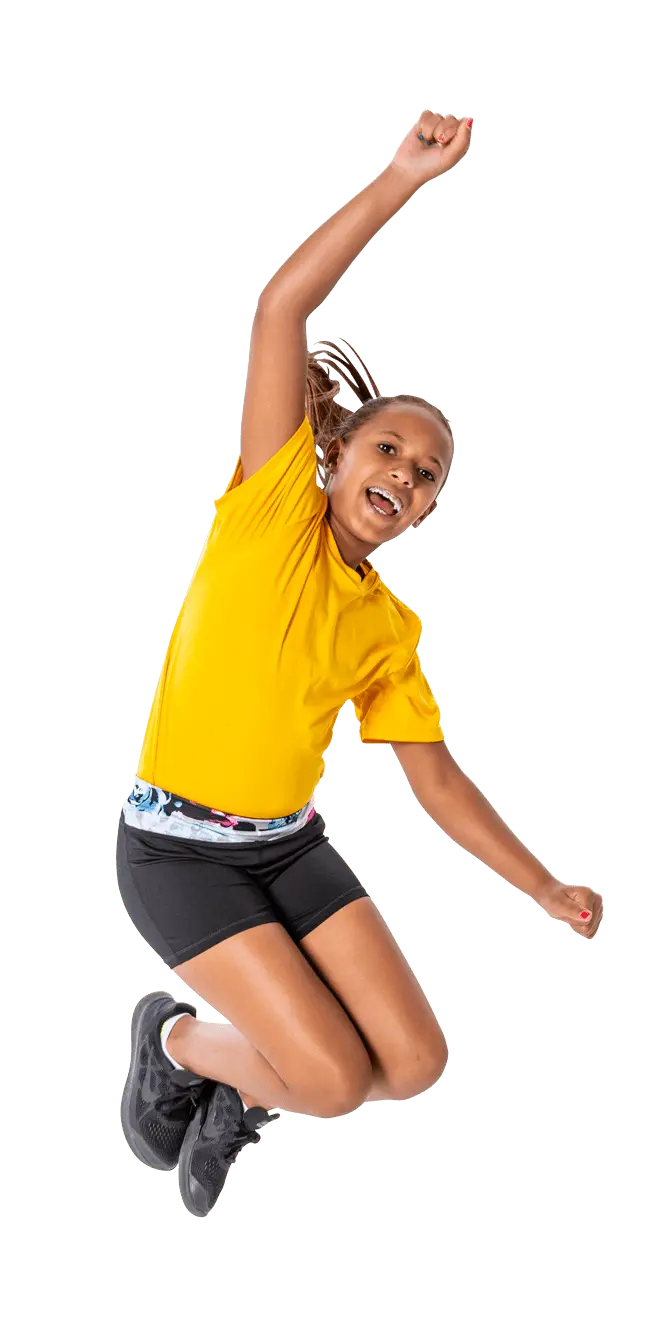


Hesitant to introduce plyometrics training to your students in your elementary PE class?
You may already be doing it and are not even aware that you are!
 What is Plyometrics?
Plyometrics, also known as jump training, includes exercises that rapidly stretches the muscles and then rapidly shortens it. It is a training technique used to increase muscular power and explosiveness. It helps improves your fast-twitch muscles, vertical jump performance, leg strength, and agility. Plyometrics are designed to produce fast and powerful movements from your body. In addition, plyometrics training also aids in injury prevention.
Some fitness professionals think plyometrics are great, while others question the safety and appropriateness for young children. However, the American College of Sports Medicine, the American Council on Exercise, and the National Strength and Conditioning Association all support the use of plyometrics, provided they are done correctly with proper supervision.
Guidelines to Follow When Implementing Plyometrics in Elementary PE:
- Proper supervision is required to ensure proper technique
- Consider the bone structure and maturity of children
- Include age appropriate exercises
- Exercises should be moderate and less intense
- Avoid hard surfaces as much as possible – grass is best
- Warm up well prior to beginning any plyometrics program
- Avoid doing plyometrics training on consecutive days
Examples of Plyometric Exercises for Elementary PE:
- Hopping
- Skipping
- Jumping
- Sprinting
- Jump rope
- Hopscotch
- Jumping jacks
- Standing jumps
- Standing hops
- Squat jumps
- Clap pushups
Equipment You Can Use to Perform Plyometric Exercises:
Check out these great IntroFit™ products, available Only From Gopher! They are designed specifically for beginners and are a great way to introduce plyometrics to your Elementary students!
In conclusion, physical educators do not need to avoid the inclusion of plyometrics training into their physical education programs. By following the simple guidelines, plyometrics training can be effective and fun.
—————————————-
For more information, check out the Introduction to Plyometrics in Physical Education & Sports webinar!