

Article Summary:
- Two teams may pass up to three times, then shoot at either rebound frame.
- No blocking or intercepting; defense consists of catching the rebound.
- A point is scored if the ball rebounds and hits the floor outside the forbidden zone.
- Stepping into the forbidden zone with the ball, or missing the frame, gives the other team a point.
- Common penalties include taking more than three steps, making a fourth pass, dropping the ball, or catching your own team’s rebound.
Product Recommendations:
Full Article:
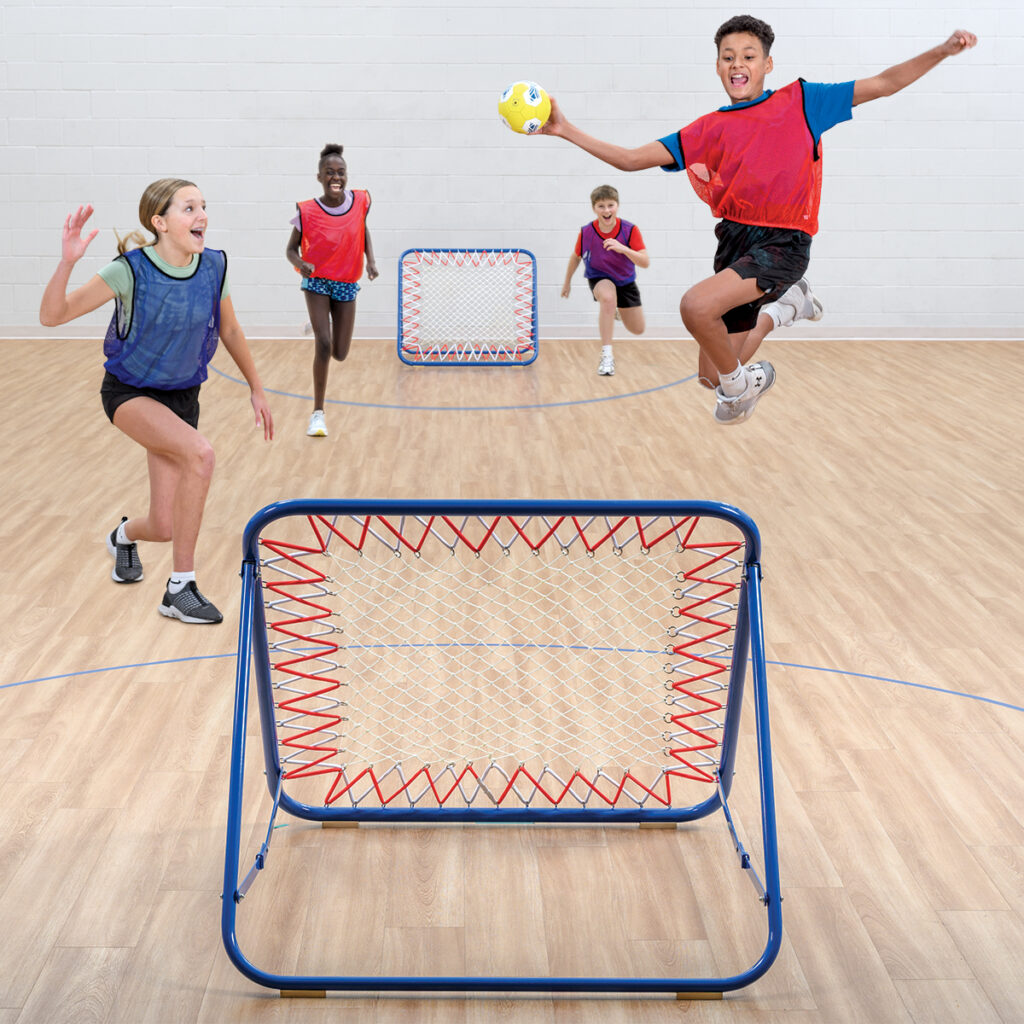
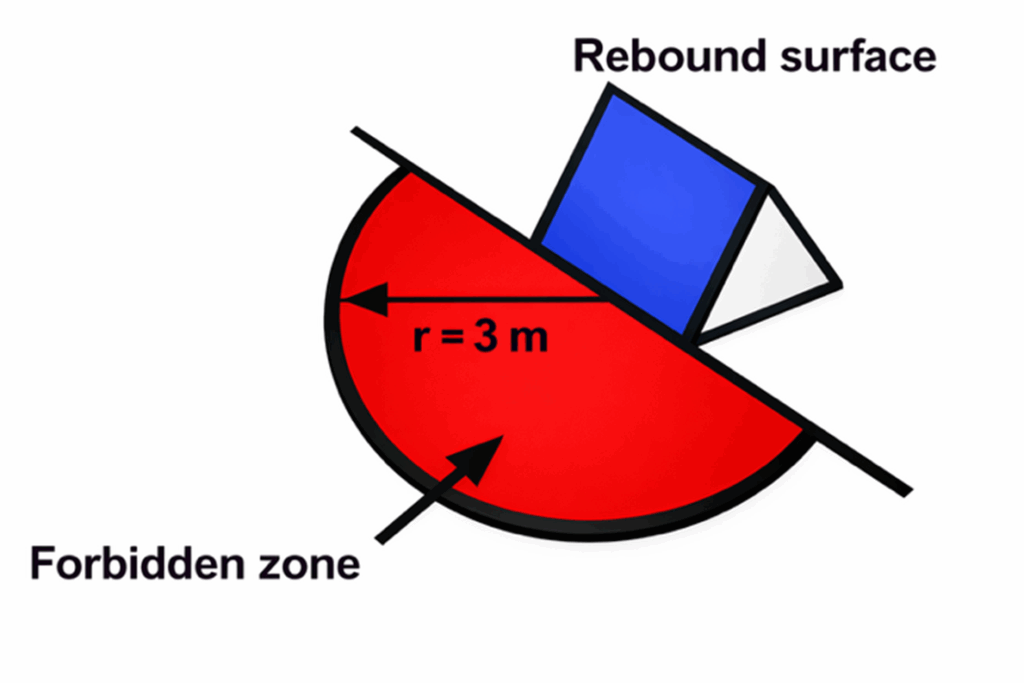
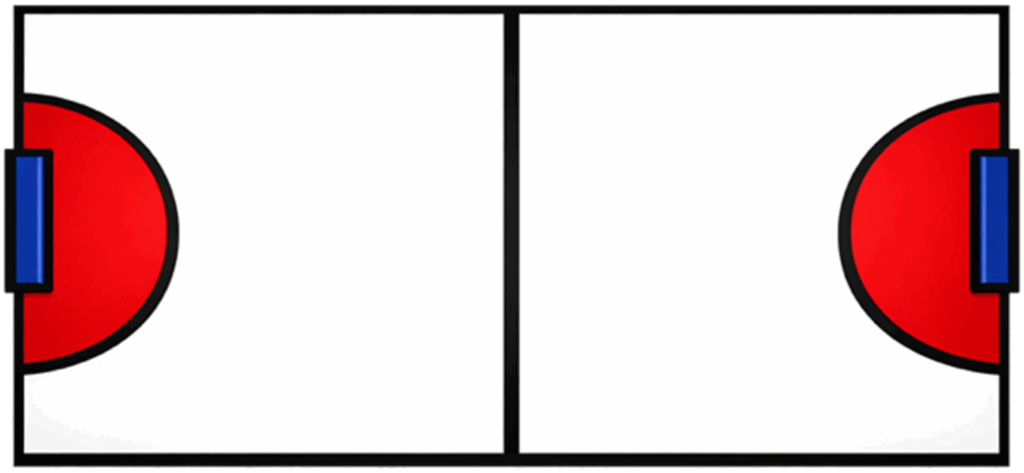
To play tchoukball, you need two official tchoukball rebound surfaces and one tchoukball ball. The game is played on either a “large” court (20 × 40 meters, or about 66 feet by 132 feet) between two teams of nine players, or a “small” court (about 16 × 27 meters) between teams of six or seven players. The rebound surfaces (which can be used by both teams) are placed at each end of the court. Each surface sits inside a semicircle with a three-meter (9.9-foot) radius, which defines the forbidden zone.
The team in possession of the ball has a three-pass limit before it must shoot the ball at a rebound surface on either end of the court. Players on the other team position themselves where they expect the ball to land so they can catch it before it touches the floor. During play, players are not allowed to interfere with the opposing team: they may not intercept passes, obstruct the movement of the player with the ball or their teammates, or prevent a defender from positioning themselves to catch the rebound.
Scoring:
A player scores a point for their team if they bounce the ball off the rebound surface in such a way that it cannot be caught by an opponent before it touches the floor.
A player gives a point to the other team if:
- They miss the rebound surface when they shoot the ball.
- They make the ball bounce out of bounds.
- They shoot the ball and it bounces back and touches them.
- They send the ball into the forbidden zone before or after it hits the rebound surface.
Penalties:
A player commits a penalty if:
- They move while dribbling the ball on the floor or juggling it in the air.
- They take more than three steps while in possession of the ball.
- They play using parts of their body below the knees.
- They make a fourth pass for their team.
- They make contact with the floor out of bounds or in the forbidden zone while holding the ball.
- They drop the ball after it is passed to them.
- They voluntarily, or by error, catch a pass from the other team.
- They catch a ball off the rebound surface that was shot by one of their teammates.
- They block opponents from moving or stop them from freely passing the ball once they have gained possession.
After a penalty, the ball is given to the other team and play resumes from the spot where the penalty was committed. A pass must be made before throwing the ball at the rebound surface.
If the ball hits an edge of the rebound surface and its path changes, the attacking team does not score. Play continues from the spot where the ball hit the floor, and the ball is awarded to the team that was defending at the time.
In a “bipolar” game (with two rebound surfaces), it is illegal to shoot the ball more than three consecutive times at the same rebound surface. A player must throw the ball in bounds from behind the baseline next to the rebound surface. This throw does not count as one of the team’s three passes.
Technical Information:
The Court and the Players
| Size of the Court | Number of Players | |
| 1st Solution | 40 × 20 m | 9 players per team |
| 2nd Solution | 14–17 m × 24–30 m | 7 players per team |
Length of time: 3 × 15 minutes
Materials Needed:
- One tchoukball ball
- Two rebound surfaces (1 × 1 m frame with a 55-degree incline)
The rebound surfaces are placed at opposite ends of the court.
Special Zones
In front of each rebound surface is a semicircle with a three-meter radius called the forbidden zone. A player may not be in the forbidden zone unless they have just shot or passed the ball. In either case, the player’s feet may not be in the forbidden zone while the ball is still in their hands.
Objectives
- For the team in possession of the ball: throw the ball off the rebound surface after a maximum of three passes. After the ball hits the surface, it must touch the floor outside of the forbidden zone to score a point. If the other team catches the ball before it hits the floor, no point is scored and play continues.
- For the defensive team: catch the ball after it has hit the rebound surface and before it touches the floor. To do this, each team member must constantly position themselves based on the offensive team’s passes. It is illegal to intercept the ball or interfere with an opponent.
Particular Rules
- There are no designated sides (either team may shoot at either rebound surface).
- It is illegal to intercept a pass from the other team.
- No more than three passes are allowed before a shot.
- A player holding the ball may take no more than three steps.
Additional Ways to Use a Tchoukball Rebounder
- Target Practice: Set up rebounders as targets. Students must hit certain sections for points to develop accuracy and hand-eye coordination.
- Relay Race: Organize a relay race where teams pass the ball down the court and bounce it off the rebounder before the next player can start.
- Rebounder Passing Drill: Players pass the ball off the rebounder to a teammate as part of a continuous drill to improve passing and catching skills.
- Goalie Challenge: Select one player as a goalie near the rebounder. Others take turns shooting while the goalie tries to catch the ball before it touches the ground.
- Dodgeball Variation: Combine tchoukball with dodgeball. Players shoot at the rebounder while opponents try to dodge or catch the ball.
- Timed Shooting Challenge: Give students a set amount of time to score as many points as possible by rebounding the ball off the frame without being caught by the other team.
- Obstacle Course Shooting: Set up obstacles around the court. Players navigate the course before attempting to shoot the ball at the rebounder.
- Tag Team Tchoukball: Players work in pairs, and only one pair is on the court at a time. They must make a successful shot before tagging in their partners.
- Capture-the-Flag Crossover: Incorporate tchoukball into a capture-the-flag game. Players retrieve a flag and score by hitting the rebounder.
- Bounce Accuracy Drill: Place targets on the ground. Players bounce the ball off the rebounder to hit the targets and improve precision.