

Physical education has always required teachers to make fast, thoughtful decisions. Which ball gives this student the best chance of success? Does the class need another visual cue, a partner, more space, less waiting, or a different way to respond? How can the same lesson stay meaningful for students with different ages, abilities, communication styles, and sensory needs?
Those decisions cannot be automated. But artificial intelligence can help physical educators spend less time formatting, rewriting, and starting from scratch, and more time doing the work only teachers can do: observing students, building relationships, giving feedback, and adapting in the moment.
The question is not whether AI belongs in physical education. The better question is: how can we use it responsibly without surrendering professional judgment?
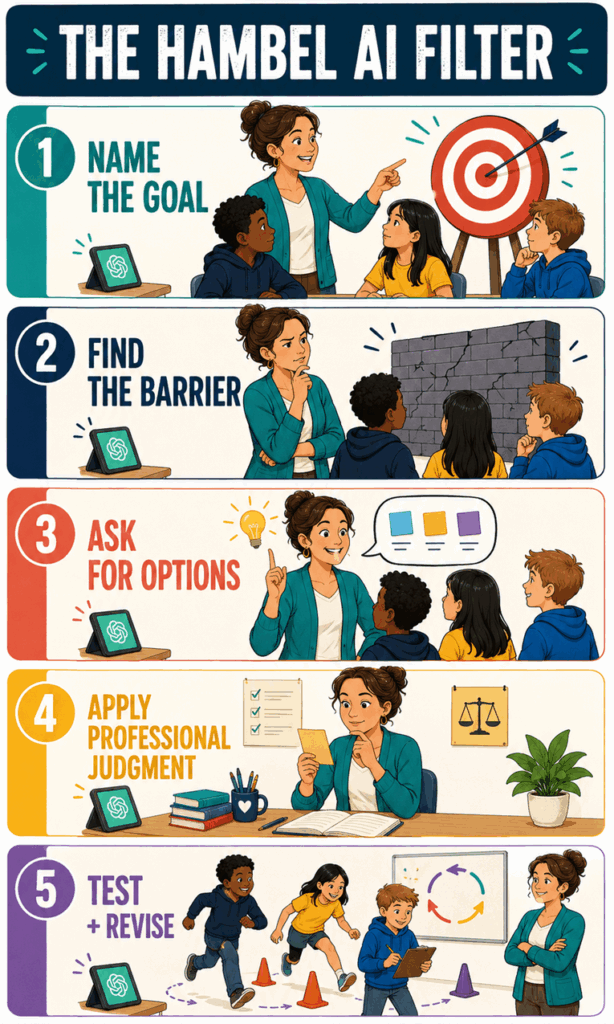
Start With the Goal
AI should not decide what students learn. The teacher should begin with the skill, concept, or outcome. If the goal is underhand rolling, the objective may be controlling force, aiming toward a target, or adjusting movement based on feedback. The equipment, distance, target, or position can change while the learning remains connected.
AI can help generate variations, but the teacher must protect the purpose. The result is not the lesson. It is a menu of possibilities.
Create Pathways to Access
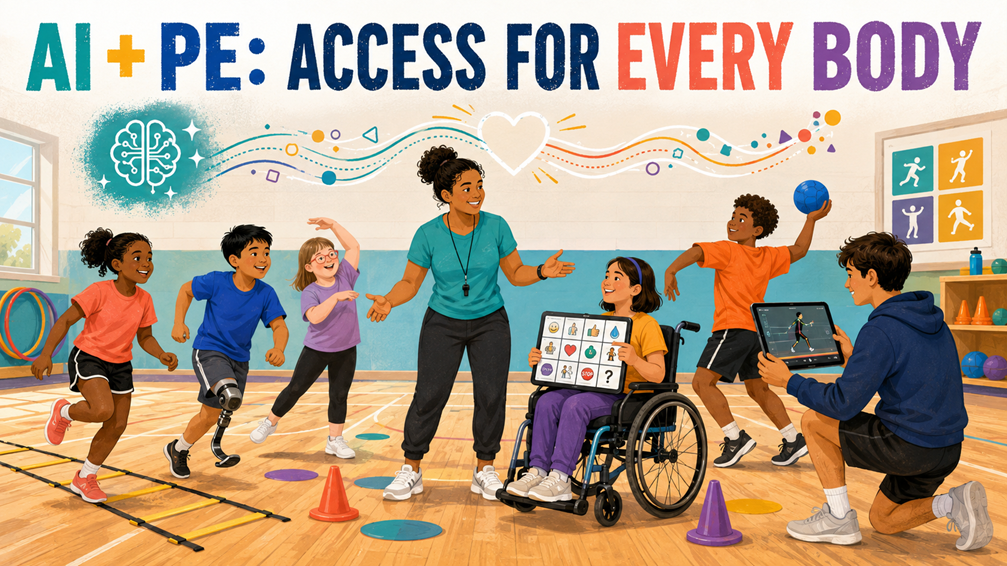
One activity does not need to look identical for every student to be meaningful. Access is not sameness. For a target-tossing lesson, students might use a beanbag, scarf, larger foam ball, ramp, closer starting point, seated position, partner support, or personal-progress goal. For dribbling, students might use a larger or lower-bounce ball, practice stationary bounces before traveling, follow floor markers, or work with a peer model.
The teacher still decides which choices are safe, appropriate, and connected to the goal. AI may suggest something that sounds reasonable but does not fit your students, equipment, space, or safety procedures. The teacher’s job is to remove the noise and keep what works.
Plan for Barriers
Strong planning is not only about what students will do. It is also about what might prevent them from participating. AI can help teachers run a quick accessibility check: Is the equipment too heavy, fast, loud, or unpredictable? Are directions too language-heavy? Are students waiting too long? Is there only one acceptable way to respond? What happens if a student needs a break?
Accessibility is not something we add after a student struggles. It is something we consider before the lesson begins.
Make Materials Clearer
AI can help draft three-step station cards, visual schedules, first-then boards, choice boards, simplified rubrics, peer-coaching cards, safety reminders, exit tickets, vocabulary cards, and student-friendly success criteria. A station card might say: Stand behind the line. Roll the ball toward the target. Get the ball and try again.
The same applies to language. Phrases like “use proper form,” “get open,” or “try harder” may be familiar to adults, but they are not always clear to students. AI can help turn vague directions into observable cues such as, “Face the target. Point with your opposite hand. Step toward the target.” Clear language is not watering down instruction. It is removing unnecessary confusion.
Support Meaningful Participation
Participation is not all-or-nothing. A student managing fatigue, injury, sensory overload, anxiety, or another temporary barrier should not be removed from the learning community or given a meaningless job. AI can help brainstorm roles that preserve dignity and purpose, such as seated passing practice, tracking successful passes, helping a partner identify open space, or rejoining a game in a modified role.
These options should not become permanent substitutes for movement. They are access points that help a student keep learning, contributing, and belonging.
Use Better Assessment
Assessment in physical education should help teachers understand learning, not simply sort students by athletic ability. Instead of assessing only whether a student can make a basket, teachers might look for whether the student can select an appropriate target, control force, adjust after feedback, participate safely, communicate with a partner, or identify one personal improvement.
For students who communicate differently, responses might be verbal, written, gestural, selected from symbols, demonstrated physically, or recorded through teacher observation. The assessment should measure the learning, not the student’s ability to express that learning in one narrow format.
Keep the Teacher Accountable
AI can produce a polished lesson plan in seconds. That does not make the lesson good. Before using AI-generated content, teachers should ask: Is this appropriate for my students? Is this safe in my space with my equipment? Does it preserve the intended skill? Does it provide a genuine way to participate? Does it respect student dignity? Can I explain why I made these adaptations?
Teachers should also protect student privacy. Prompts can describe general needs without including names, diagnoses, medical details, or confidential educational information.
The Bottom Line
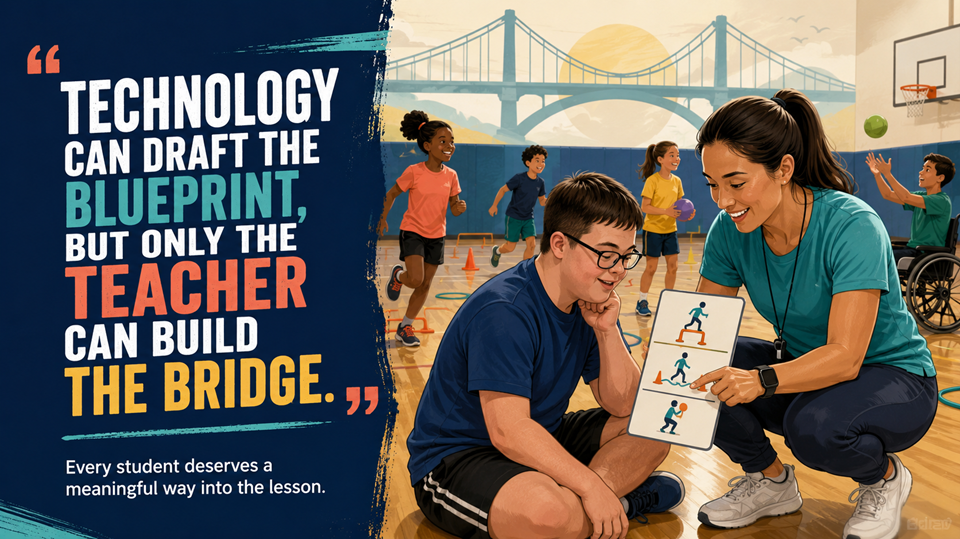
AI will not replace physical educators. But physical educators who use AI thoughtfully can reduce administrative friction and create more time for what matters most: observing movement, giving meaningful feedback, solving problems in real time, and helping every student experience success.
AI knows patterns. Physical educators know people. Every student deserves a way into the lesson. Not the same way. A meaningful way.